

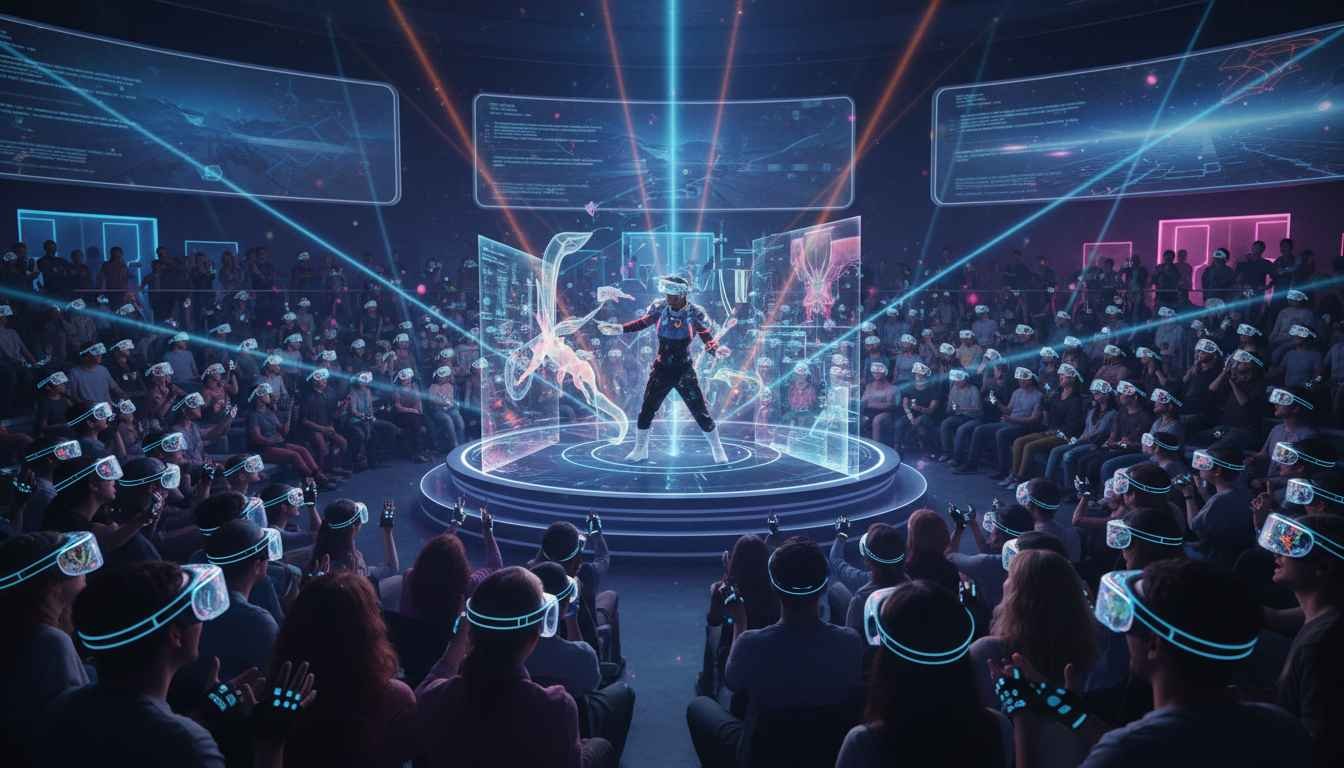



You are being lied to. The promise of mixed reality at entertainment events is that it transforms mundane concerts, festivals, and sporting events into immersive wonderlands where your senses are supposedly stretched beyond the ordinary. Yet, if you squint past the holograms and augmented overlays, what you often find is a complex web of marketing spin, half-baked technology, and audience confusion masquerading as innovation.
Mixed reality (MR), the chimeric offspring of augmented reality (AR) and virtual reality (VR), has surged into the entertainment industry under the banner of “next-level engagement.” The premise is simple: blend the real world with virtual elements seamlessly enough that attendees forget the barriers between digital and physical. From AR-enhanced concerts where holographic performers dance alongside real musicians to VR-enabled theme parks that promise fully interactive adventures, MR has become the latest darling of tech-savvy producers.
But before we get lost in the glittering spectacle, let’s take a closer look at what “mixed reality” really means in practice. At an event, MR typically involves head-mounted displays, projection mapping, and real-time motion tracking. The goal is to overlay digital objects onto the physical environment in ways that respond to attendees’ movements. Industry standards, such as the IEEE MR guidelines, emphasize latency under 20 milliseconds to prevent motion sickness and ensure a believable experience. Yet, even top-tier events struggle to hit these benchmarks consistently, leaving users dizzy, annoyed, or just plain disoriented.
Case studies reveal that audience reactions are wildly polarized. At the 2023 Ultra Music Festival in Miami, MR wristbands and AR projections were introduced to “personalize” the crowd experience. Some attendees marveled at the synchronized light patterns reflecting their movements, while others complained that the devices were glitchy and obstructive. The experience was marketed as transformative, but post-event surveys revealed that nearly 40% of participants felt it added little value beyond novelty.
Integration is another hidden challenge. MR is not simply about strapping on a headset; it requires sophisticated content management, high-speed internet, and flawless spatial recognition. Technical failures, ranging from misaligned holograms to delayed interactions, can transform a highly anticipated show into a chaotic spectacle. This is where the entertainment industry often stumbles, underestimating the gap between marketing hype and engineering reality.
Are you planning a trip to Oil Spring City and looking for an exciting experience? Look no further than the unique offerings from Seneca Gaming and Entertainment. This vibrant venue not only provides thrilling gaming options but also serves as a cultural hub showcasing the rich heritage of the Seneca Nation. Whether you’re a gaming enthusiast or simply looking to explore local attractions, our comprehensive guide will help you navigate everything this city has to offer. To get started on your adventure, check out our detailed resource on seneca gaming and entertainment oil spring, which highlights the best activities, dining options, and entertainment in the area.
It is also important to consider the cost factor. Deploying MR at scale is prohibitively expensive. Cutting-edge hardware, content creation, software licenses, and on-site technical teams easily inflate budgets by 20-30% beyond traditional event setups. Smaller venues or independent organizers are often priced out, limiting MR experiences to well-funded, commercial events. Yet, this exclusivity feeds the illusion of novelty, making attendees believe they are part of a groundbreaking phenomenon rather than participants in a carefully curated marketing exercise. For ongoing updates and news coverage of MR in entertainment, visit 20 Minutes.
Troubleshooting Mixed Reality Challenges
| Problem | Solution |
|---|---|
| Glitches in holographic projections | Regular calibration and redundancy systems to ensure alignment |
| Motion sickness or disorientation | Maintain latency under 20ms and provide breaks for users |
| High operational costs | Adopt modular MR elements and scale gradually |
| Audience confusion or low engagement | Integrate MR interactions with clear instructions and intuitive design |
| Hardware incompatibility | Standardize devices and test cross-platform performance |
Who Should Avoid This?
MR is not for every attendee or organizer. Individuals prone to motion sickness or epilepsy should approach MR experiences with caution, as rapid visual overlays and VR interactions can trigger adverse reactions. Smaller event organizers with limited technical resources may find MR more burdensome than beneficial, risking negative reviews and budget overruns. Corporations seeking quick spectacle without investing in proper infrastructure often find themselves paying more for public relations spin than genuine audience engagement.
Audience Perception and the Satirical Gap
The irony of MR lies in the chasm between promise and perception. Marketing teams tout “personalized immersion,” yet attendees are often handed generic overlays that barely react to their individual actions. While VR gaming at home allows players agency, MR in large-scale events often reduces users to passive spectators interacting with preprogrammed digital elements. The spectacle dazzles, but the engagement is largely illusory. Attendees leave with social media photos of glowing wristbands and floating avatars, but few remember actual interactivity. The experience, in truth, is more about optics than genuine immersion.
Technology vs. Experience
From a UX perspective, the real challenge of MR is balancing technological novelty with actual user experience. Overloading events with MR gadgets can create cognitive fatigue, turning curiosity into frustration. A successful MR experience should enhance, not overshadow, the core content of the event. UX designers must focus on context-aware interactions, simple controls, and seamless integration rather than adding every possible digital gimmick. According to Nielsen Norman Group research, user engagement drops sharply when novelty supersedes usability, a lesson often ignored in high-profile MR deployments.
Future Directions
Despite these pitfalls, MR holds potential to revolutionize entertainment. Emerging technologies such as AI-driven avatars, adaptive content streaming, and lightweight MR wearables promise experiences that are both intuitive and engaging. Imagine a live concert where visual effects adapt dynamically to the mood of the crowd, or a theme park ride where the virtual storyline shifts based on user choices in real time. For now, however, most MR events function as controlled experiments, mixing awe with confusion, and fascination with mild frustration.
Conclusion
Mixed reality at entertainment events is both a triumph of imagination and a lesson in human gullibility. Attendees are dazzled by what they see, yet often remain unaware of the technical and logistical gymnastics behind the curtain. While MR can create compelling moments of wonder, it is equally capable of generating frustration and disappointment if approached without proper UX planning and operational foresight. Understanding its limitations, setting realistic expectations, and prioritizing user experience over spectacle are essential for any organizer seeking to leverage MR successfully.

